Kido met with Daisuké Taniguchi in Nagoya
A ManKido’s meeting with Daisuké Taniguchi in Nagoya confirms that the real Daisuké survived the identity exchange with Makoto Hara and gives Kido the first-person account needed to understand their decision. Daisuké’s description of becoming someone else through a register swap turns the investigation from a question of documents and suspected crime into an encounter with the unstable boundary between a recorded identity and a lived self.
Background and Stakes
The meeting follows a prolonged investigation into the man who had married Rié under the name Daisuké Taniguchi. Government records had validated that identity through marriage and death notifications, as well as everyday transactions involving a driving license, health insurance, and pension contributions. Yet Kyoichi Taniguchi, the real Daisuké’s brother, had identified the deceased man as someone else. The contradiction left Kido trying to determine how one man could be officially recognized as another while the person whose name he used still existed.
The investigation also had practical consequences for Rié and her children. Kido petitioned the Miyazaki Family Court to reverse the record of Daisuké’s death and remove the false marriage from Rié’s family register, restoring her maiden name. The court required Rié to appear and requested DNA evidence that her late husband was not Daisuké. Meanwhile, Kido considered whether the real Daisuké could have been unregistered, a possibility raised by cases involving children excluded from official records under Japan’s three-hundred-day rule. If someone without a family register disappeared or was killed, the state might have no record against which to recognize that person’s death. These possibilities had kept the case suspended between administrative error, identity exchange, and suspected murder.
The Meeting in Nagoya
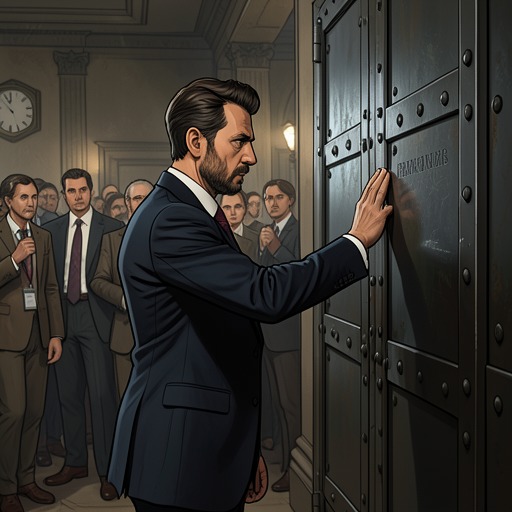
At one o’clock, Kido and Misuzu had lunch in the station building before separating: Kido would interview the man alone, and Misuzu would join them afterward. Their appointment was at a Komeda’s Coffee branch about a ten-minute walk from Nagoya Station. Unfamiliar with the area and confused by the number of nearby branches, Kido arrived five minutes late. A barista directed him to the smoking area, where a man in a gray knit cap and an embroidered bomber jacket sat at a table divided from the next by a movable wooden partition.
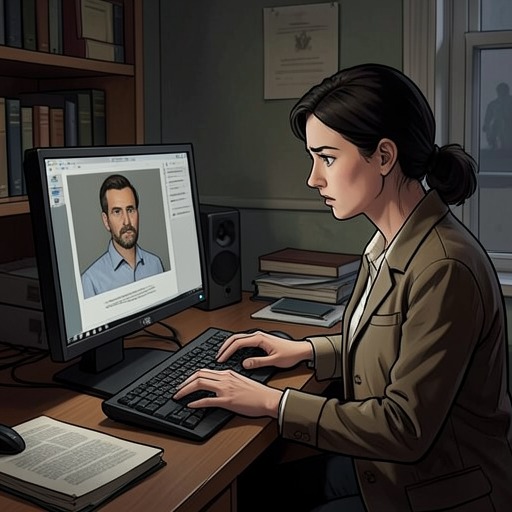
Kido knew Daisuké’s face from photographs, though the images were more than ten years old. The man had aged, but Kido recognized him without doubt. His heartbeat quickened as the recognition settled into a decisive fact: Daisuké was alive. The discovery also brought relief, because Kido had continued to trust that Makoto Hara had not killed him. When Kido addressed the man by name, the man hesitated before confirming it. He then asked Kido to call him Sonézaki and sought permission to smoke. Kido agreed to the name, accepting that the man before him was both the Daisuké he had come to find and someone who no longer wished to be addressed that way.
What the Register Exchange Changed
Daisuké explained that the effects of exchanging registers did not end with changing documents. In his account, after a year under a new identity, a person could begin to feel like a different person. When Kido called him Daisuké Taniguchi, the name initially seemed to refer to someone else. Along with their pasts, he said, the men had exchanged everything. Before the swap, he hated the Taniguchis; after leaving his old connections behind, even Kyoichi, whom he saw on Facebook, looked to him like the comic proprietor of a provincial inn rather than his brother.
Asked whether he thought about the old days, Daisuké described forgetting as a consequence of severed relationships and a move elsewhere, not an act of will. Trying to erase a hated past, he said, could not remove it; a person had to overwrite it with another person’s past until the original was no longer recognizable. The explanation makes the register exchange more than a legal disguise: in Daisuké’s account, its power came from living within a different network of relations and allowing that life to reshape memory and self-understanding. His request to be called Sonézaki gives that change a practical, immediate form even as Kido’s recognition restores the buried name to the conversation.
Why Daisuké Chose Hara
Kido asked what Daisuké knew of Hara’s early life, including that Hara’s father had been a killer and that Hara had changed registers twice. Daisuké’s story clarified the sequence behind the exchanges. Hara’s past was so difficult that Yoshihiko Sonézaki seemed almost his only available swap partner. Daisuké believed Hara had not objected to the fact that Sonézaki was a gangster’s child; what mattered was that Hara disliked Sonézaki when they met. Kido consequently understood that the original Sonézaki had been the person who imposed Hara’s register on the defenseless Tashiro.
Daisuké said that the Daisuké Taniguchi register was prized because it carried a clean past and no criminal record. One person kept trading registers in hopes of obtaining it, like the figure in the Straw Millionaire legend. Daisuké himself had cared chiefly about cutting ties with his family, but he would not exchange identities with someone carrying a criminal record or with a person who might try to claim the Taniguchi estate. Meeting Hara changed his choice. Daisuké thought his own identity might help Hara begin again, and Hara listened carefully to his account and said he wanted to make the most of the life that remained to him. Though they met only twice, Daisuké liked Hara and remembered the apparent purity in his eyes and his wish to leave his old life behind before his time was over. Their exchange was therefore neither an arbitrary transaction nor simply an escape: Daisuké believed he was giving his life to someone capable of making something of it.
Conclusion and Significance
At the end of the interview, Daisuké admitted that he had been nervous and had worried he might regret coming, but was glad they had met because he had been able to ask what was on his mind. He offered his hand. Kido noticed its rough, clammy texture and wondered whether Hara and Daisuké had shaken hands in the same way seven years earlier, when Hara arrived as Sonézaki and left as Daisuké. Rather than treating the handshake as a simple farewell, Kido imagined the earlier exchange through Hara’s eyes, then paid and left the café.
Afterward, Kido completed his report to Rié and, following a year and three months of investigation, decided to bring his pursuit to a close for the time being. The meeting supplies the confirmation that the case’s official records could not: the real Daisuké is alive, and Hara’s assumed identity was the result of a deliberate exchange between men with different reasons to leave their pasts behind. At the same time, the conversation refuses to make identity a matter of names alone. Daisuké remains recoverable by his old name, but his account shows how relationships, place, memory, and the life lived under a borrowed register can make that name feel as if it belongs to someone else.